Complete Guide to Veterinary Drug Licence: Process, Requirements, and Compliance – Vetnation Pharma
The animal healthcare industry is expanding rapidly due to rising livestock farming, companion animal care, and heightened awareness around animal wellness. However, operating a business in the veterinary pharmaceutical domain requires strict adherence to legal standards. Obtaining a valid Veterinary Drug Licence is the foundational step for any individual or business looking to manufacture, distribute, store, or sell animal healthcare products.
Whether you plan to open a retail veterinary pharmacy, start a wholesale distribution firm, or establish a pharma franchise business, understanding the veterinary drug licence requirements is essential. This guide provides a clear, step-by-step overview of the veterinary drug licensing process, eligibility standards, regulatory compliance, documentation, and the strategic role played by trusted leaders like Vetnation Pharma.
What Is a Veterinary Drug Licence?
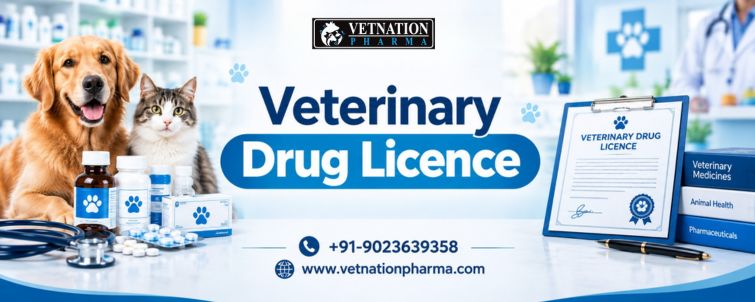
A Veterinary Drug Licence is an official legal authorization granted by government drug control authorities permitting a business or individual to engage in activities related to animal medicines. These activities include manufacturing, stocking, wholesale distribution, retail sales, and export of veterinary medicines and biologicals.
Because animal medicines directly impact livestock health, food safety (via meat and milk supply chains), and domestic pet well-being, the government regulates these products with high scrutiny. The veterinary medicine business licence ensures that every entity operating in the supply chain maintains adequate infrastructure, proper storage facilities, qualified personnel, and quality control systems.
Without a valid veterinary drug licence, buying, stocking, or selling veterinary pharmaceutical products is illegal and subject to penal actions under national drug regulations.
Why Is a Veterinary Drug Licence Important?
Acquiring a veterinary drug licence is not merely a legal formality; it is a vital safeguard for public health, animal welfare, and commercial sustainability. Here is why securing this authorization is crucial:
1. Legal Authorization and Protection
Operating with an official veterinary drug licence protects your enterprise from legal penalties, fines, store sealings, or prosecution by regulatory inspectors.
2. Quality Control and Safety Assurance
Animal medications often contain active pharmaceutical ingredients (APIs), antibiotics, hormones, and vaccines that require precise formulation and controlled storage conditions. Obtaining a veterinary medicine licence ensures that businesses follow strict storage and handling practices.
3. Business Credibility and Trust
Veterinarians, dairy farmers, pet owners, and livestock operators prefer dealing with certified suppliers. Possessing a valid veterinary drug licence builds immediate market trust and brand reliability.
4. Commercial Growth and Expansion
A valid licence opens doors to official distribution agreements, government tenders, contracts with commercial livestock farms, and partnerships with established manufacturers like Vetnation Pharma.
Who Needs a Veterinary Drug Licence?
Any business entity operating within the veterinary medicine supply chain requires an appropriate category of veterinary drug licence. The primary beneficiaries and applicants include:
- Veterinary Medicine Retailers: Local shops selling prescription and over-the-counter animal medicines.
- Wholesalers and Stockists: Distributors supplying medicines to retail shops, clinics, and dairy co-operatives.
- PCD Franchise Holders & Marketers: Entities distributing formulations manufactured by partner companies under specialized agreements.
- Veterinary Drug Manufacturers: Production units synthesizing active ingredients or formulating finished dosage forms.
- Importers and Exporters: Businesses trading animal medicines across international borders.
Depending on your operational scope, you may need a retail veterinary drug licence, a wholesale veterinary drug license, or a manufacturing authorization.
Basic Eligibility Requirements
Before initiating the application process, candidates must ensure they satisfy specific baseline criteria. While exact standards may vary slightly across different state drug control departments, the standard veterinary drug licence requirements generally include:
1. Suitable Commercial Premises
- Minimum floor space (typically 10 to 15 square meters for retail or wholesale units, with higher requirements for combined operations).
- Clean, well-ventilated, pest-proof, and structurally secure premises.
- Commercial zoning authorization as per local municipal guidelines.
2. Qualified Personnel
- For Retail Licence: A registered pharmacist registered with the State Pharmacy Council or a qualified competent person approved by the drug authority.
- For Wholesale Licence: A registered pharmacist or a graduate with a minimum required experience in pharmaceutical handling (typically 1 year in drug sales/distribution).
3. Cold Storage Facilities
- Functional refrigeration equipment (refrigerator or cold room) capable of maintaining temperatures for vaccines, sera, and heat-sensitive biological products.
Key Documents Required for a Veterinary Drug Licence
Preparing an accurate documentation packet expedites the approval process. Missing or incorrect documents are the leading cause of application delays.
Checklist of Required Documents:
- Application Form: Officially prescribed form (e.g., Form 19 or equivalent depending on jurisdiction) filled out completely.
- Proof of Ownership or Tenancy: Lease agreement, rent deed, or property ownership documents for the commercial premises.
- Premises Layout Plan: A blueprint or scaled layout showing room dimensions, entrance/exit, storage racks, and refrigerator placement.
- Identity and Address Proof: Aadhaar card, PAN card, passport, or voter ID of the applicant/partners/directors.
- Business Registration Proof: Certificate of Incorporation, Partnership Deed, or GST Registration Certificate.
- Qualification Proof of Competent Person: Degree/diploma certificate, registration certificate from the Pharmacy Council, and experience certificates.
- Appointment & Acceptance Letters: Official declaration linking the registered pharmacist/competent person to the applicant firm.
- Cold Chain Proof: Purchase invoice or guarantee card for the refrigerator/deep freezer installed at the premises.
- Challan/Fee Receipt: Proof of government application fee payment.
Step-by-Step Veterinary Drug Licence Application Process
The veterinary drug licensing process has become increasingly streamlined due to digital portals managed by state drug administration departments. Here is the standard procedure to follow:
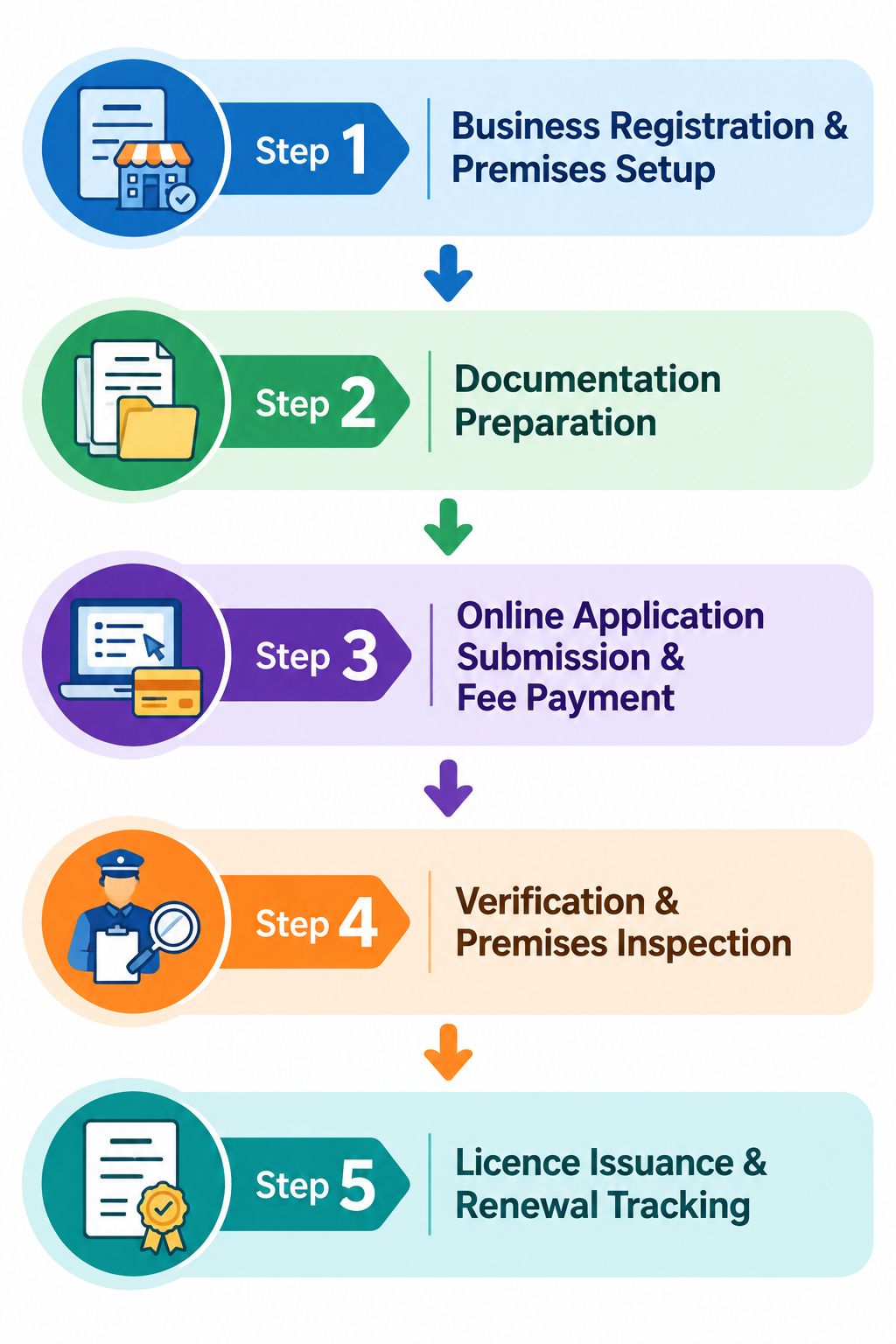
Step 1: Choose Your Business Structure and Premises
Select an appropriate business entity (Proprietorship, Partnership, LLP, or Private Limited) and secure commercial premises meeting spatial and sanitation standards.
Step 2: Gather Required Documents
Assemble all personal, legal, qualification, and premises documents into a complete file. Ensure all copies are self-attested or notarized where required.
Step 3: Online Portal Registration and Form Submission
Log on to the state drug control licensing portal. Register your business account, select the relevant category (Retail or Wholesale veterinary medicine licence), upload scanned documents, and pay the prescribed fee online.
Step 4: Inspection by Drug Inspector
Upon receiving your application, the licensing authority assigns a Drug Inspector (DI) to visit your premises. The inspector verifies:
- Physical dimensions and structural safety.
- Functionality of cold storage devices.
- Originals of submitted documents.
- Presence and credentials of the qualified person/pharmacist.
Step 5: Approval and Licence Issuance
If the inspector’s report is favorable and all veterinary pharmaceutical regulations are met, the Licensing Authority issues your official Veterinary Drug Licence carrying a unique license number.
Regulatory and Compliance Requirements in Veterinary Pharma
Obtaining a veterinary drug licence is only the beginning. To keep the licence valid and operational, businesses must strictly observe ongoing regulatory mandates:
- Maintenance of Sale & Purchase Registers: Detailed records of every purchase and sale must be maintained, listing batch numbers, manufacturing dates, expiry dates, and manufacturer details.
- Prescription Drug Records: Schedule H and Schedule H1 drugs must only be dispensed against valid prescriptions written by registered veterinary practitioners.
- Storage Temperature Logs: Regular temperature recording logbooks must be maintained for cold storage equipment holding biologicals and antibiotic injections.
- Inspection Readiness: Premises and registers must remain accessible for unannounced inspections by authorized Drug Inspectors.
- Expiries Management: Expired veterinary drugs must be segregated into designated “Not for Sale” areas and returned or disposed of according to standard guidelines.
Licence Renewal and Maintenance
A veterinary drug licence is typically valid for five years from the date of issuance, depending on local statutory rules. However, maintaining continuity requires timely action:
- Timely Renewal Submission: File the renewal application along with the prescribed fee before the current licence expires.
- Retention Fees: Certain jurisdictions require periodic retention fee payments to keep the licence active.
- Reporting Changes: Any change in business address, qualified person, partnership structure, or shop layout must be promptly declared to the Licensing Authority for official endorsement.
Failure to renew your veterinary drug license on time can lead to penalty fees or cancellation, forcing the business to halt commercial operations.
Common Mistakes to Avoid During Application
Many applicants encounter rejections or delays due to avoidable errors during the veterinary drug licence application. Watch out for these common pitfalls:
- Non-Compliant Premises Layout: Choosing residential spaces without commercial clearance or selecting premises under the minimum square footage requirement.
- Incomplete Document Filings: Uploading expired rent agreements, unclear layout maps, or un-attested certificates.
- Unqualified Pharmacist Documentation: Submitting pharmacist registration documents that have expired or are registered simultaneously with another active firm.
- Inadequate Cold Chain Facilities: Failing to install functional refrigeration equipment prior to the inspector’s physical visit.
- Incorrect Category Selection: Applying for a retail veterinary pharmaceutical licence when the intended core activity is wholesale distribution or franchise marketing.
Role of Licensed Veterinary Pharmaceutical Businesses
Licensed veterinary pharmaceutical operators serve as the bridge between research laboratories, high-quality manufacturers, and livestock farmers. By operating under an official veterinary drug licence, distributors and retailers ensure that animal healthcare products remain safe, unadulterated, and effective throughout the supply chain.
Compliance with veterinary pharmaceutical regulations builds systemic resilience against antibiotic resistance, protects livestock yield (such as milk, meat, and eggs), and ensures domestic pets receive precise therapeutic formulations.
How Vetnation Pharma Supports the Veterinary Pharma Sector
Navigating the animal health sector requires strong partnerships with trusted, compliant manufacturers. Vetnation Pharma stands out as a leading name in the veterinary pharmaceutical industry, committed to high manufacturing standards, regulatory compliance, and product safety.
Here is how Vetnation Pharma empowers distributors, franchise holders, and business owners:
- GMP – WHO Compliant Formulations: All veterinary feed supplements, boluses, injections, powders, and liquids produced by Vetnation Pharma strictly comply with stringent quality parameters.
- Comprehensive Documentation Support: When applying for or expanding a veterinary drug licence, partners working with Vetnation Pharma receive seamless documentation, including detailed product lists, batch test reports, certificates of analysis (COA), and authorization letters.
- Wide Product Range: From livestock nutritional supplements to advanced therapeutic medicines, Vetnation Pharma provides an expansive portfolio designed to meet diverse market demands.
- Franchise and Wholesale Growth: Vetnation Pharma offers attractive franchise opportunities, providing stockists with ethical business rights, promotional support, and market guidance to build profitable enterprises.
By aligning with Vetnation Pharma, wholesale distributors and retail partners ensure they deliver genuine, high-potency formulations while maintaining compliance with all regulatory norms.
Frequently Asked Questions (FAQs)
Q1: Can I sell veterinary medicines without a Veterinary Drug Licence?
Ans: No. Selling, stocking, distributing, or manufacturing animal medicines without a valid veterinary drug licence is illegal and punishable under national drug and cosmetics regulations.
Q2: What is the main difference between a wholesale and retail veterinary drug licence?
Ans: A retail veterinary medicine licence authorizes direct sales to end consumers, pet owners, and farmers against valid prescriptions. A wholesale veterinary drug license allows selling in bulk quantities to retailers, stockists, hospitals, and institutions.
Q3: Is a registered pharmacist mandatory for a wholesale veterinary drug licence?
Ans: In many jurisdictions, a wholesale licence can be granted either to a registered pharmacist or to a university graduate who possesses a minimum of one year of experience in drug handling and sales, subject to approval by the regional Drug Controller.
Q4: How long does it take to get a Veterinary Drug Licence approved?
Ans: Once the application and complete documentation are submitted online, the approval process usually takes between 15 to 45 business days, depending on the inspection schedule and state drug control efficiency.
Q5: How does Vetnation Pharma assist new veterinary medicine distributors?
Ans: Vetnation Pharma assists distributors and franchise partners by providing GMP-certified high-quality veterinary formulations, product documentation, approval certificates, and guidance needed for smooth business operations.
Conclusion
Securing a Veterinary Drug Licence is a pivotal step toward building a successful and compliant animal healthcare business. From verifying eligibility standards and organizing documents to passing physical inspections and ensuring continuous record-keeping, every stage of the veterinary drug licensing process demands attention to detail.
By following statutory veterinary drug licence requirements, maintaining high ethical standards, and partnering with quality-driven manufacturers like Vetnation Pharma, business owners can establish a thriving presence in the growing veterinary pharmaceutical market while contributing positively to livestock health and animal welfare.